
TERN Takes First Place at NATSEC Veteran Pitch Competition: How Contested Logistics is Driving the Win
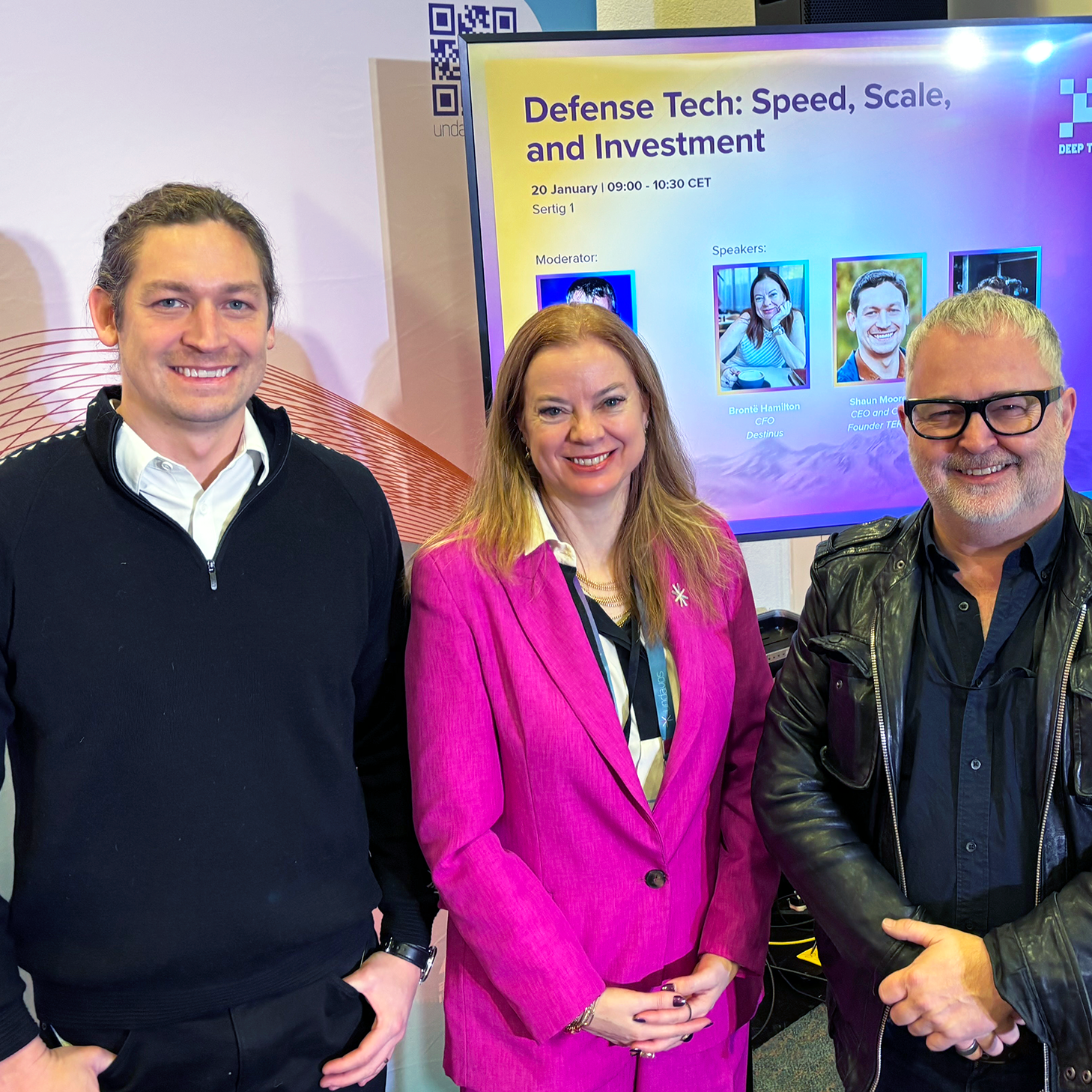
TERN has taken first place this week, winning the eMerge Americas National Security (NATSEC) Veteran Pitch Competition.
The format was direct: a four-minute pitch followed by five minutes of Q&A. No room for abstraction. No time for theory. The judges evaluated one key component above all else: Is this mission-ready?
The recognition includes participation in NATSEC Demo Day at PortMiami, fast-track entry into the Global Startup Accelerator + Showcase, and strategic legal support and grant funding.
But the greater significance is not the prize package. It is what this win signals about where national security priorities are heading.
Why This Moment Matters
Pitch competitions are rarely about trophies.
The NATSEC Veteran Pitch Competition brought together mission-ready, dual-use technologies and placed them in front of national security leaders who evaluate: Is this operationally relevant now?
The recognition reflects something larger than a single event.
It reflects growing alignment between innovators and operators. It reflects urgency. It reflects a defense ecosystem that is actively searching for technologies that can transition quickly; not years from now, but immediately.
The follow-on opportunity to demonstrate at a NATSEC Demo Day, in front of more than 400 senior national security stakeholders, reinforces that this is not theoretical interest. It is direct exposure to decision-makers responsible for mobility, logistics, and operational resilience.
Moments like this matter because they accelerate dialogue while compressing timelines. They move conversations from “interesting” to “integratable.”
What Is Contested Logistics?
Contested logistics refers to the challenge of moving forces, equipment, and supplies when communications, positioning, and infrastructure are degraded or under attack.
In modern environments, this includes GPS jamming and spoofing, satellite communications disruption, electronic warfare targeting movement systems, and autonomous platforms losing trusted location data.
When logistics is contested, mobility becomes fragile. And mobility is the backbone of operational tempo.
Why Contested Logistics Is Now Central to Defense Strategy
The Pentagon’s recent declaration of the top six strategic initiatives make one thing clear: contested logistics is no longer a supporting issue. It is a core operational priority.
Senior defense leadership has identified mobility in degraded environments as a decisive factor in modern conflict. Distributed operations, expeditionary maneuver, and rapid force projection all depend on one foundational capability: trusted positioning.
Without continuous, reliable location awareness:
- Convoys lose coordination.
- Precision timing degrades.
- Digital mission systems fragment.
- Operational tempo slows.
Resilient positioning underpins every layer of modern mobility.
The Department of War’s evolving approach to Assured Positioning, Navigation, and Timing (PNT), along with initiatives focused on contested environments and spectrum resilience, reflects a broader recognition: positioning can no longer be treated as an assumed utility.
It must be engineered as infrastructure.
Contested logistics is forcing that shift. When signals are disrupted, mobility becomes fragile. When mobility becomes fragile, deterrence weakens. Resilient positioning is not a niche technical upgrade; it is the enabling layer for sustained operational advantage.
The Structural Problem With GPS
GPS was designed for a different era. For decades, it was reliable enough to be assumed. Today, interference is routine in conflict zones, jammers are inexpensive, spoofing is increasingly sophisticated, and spectrum-based alternatives introduce new dependencies.
Most proposed backups repeat the same architecture: they rely on signals.
Contested logistics demands something different. It requires positioning that does not depend on satellites, spectrum, or infrastructure that can be targeted.
How TERN Approaches Contested Logistics
TERN’s Independently Derived Positioning System (IDPS™) delivers real-time vehicle positioning without satellites, GNSS, spectrum, or terrestrial beacons.
It operates using onboard vehicle sensors and preloaded maps. No external signals required.
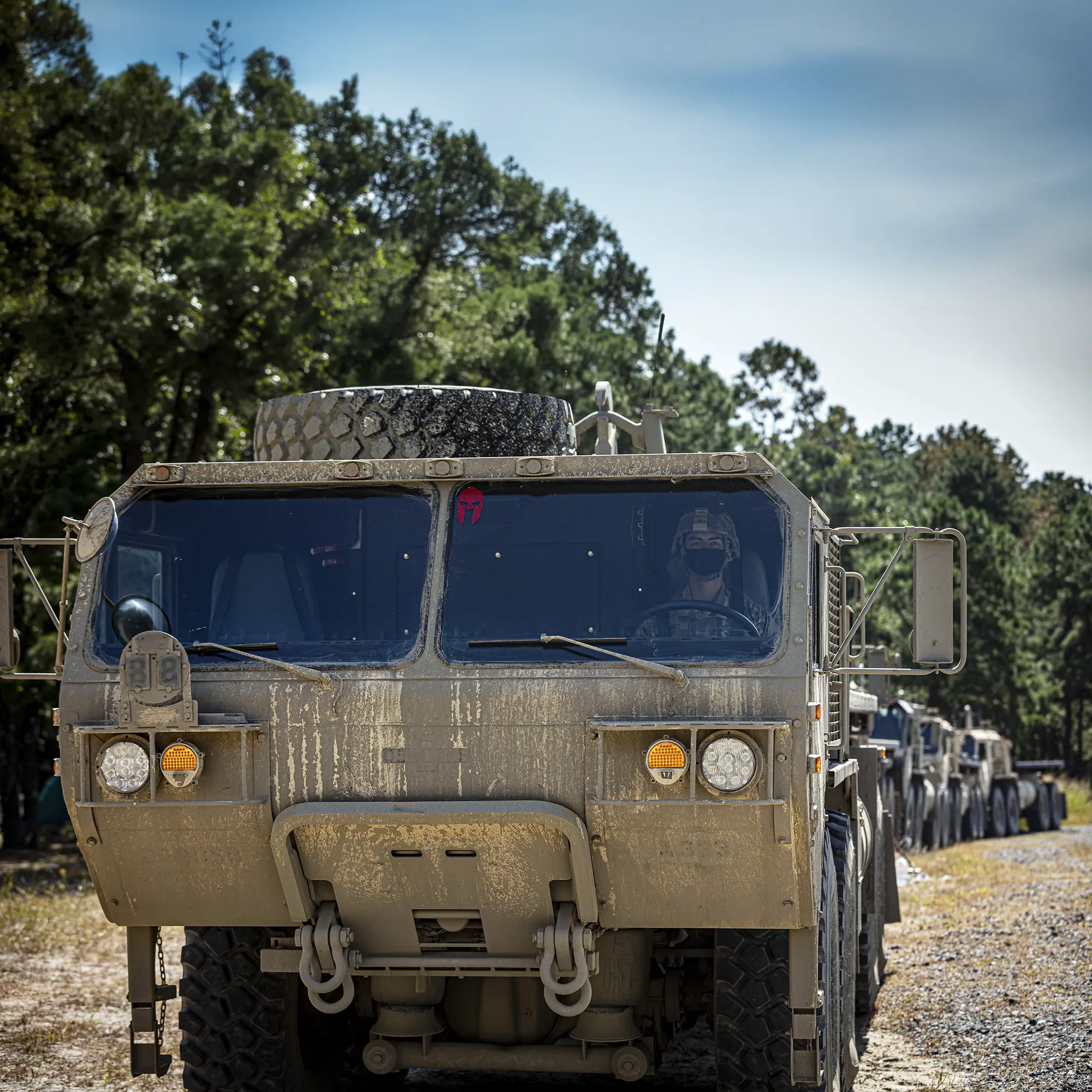
This architecture supports contested logistics by maintaining convoy mobility in GPS-denied environments, enabling autonomous systems to continue operating, preserving coordination without RF dependency, and removing a single point of failure from mission systems.
Resilient positioning is not an enhancement. It is the layer that protects everything built on top of it.
The Bottom Line
TERN is honored to be recognized at NATSEC. But the real momentum is not about a pitch competition.
Contested logistics is reshaping defense priorities. Freedom of movement must now be engineered, not assumed.
The transition from satellite dependence to software-defined resilience is already underway.